
What Are Escalation Factors?
A BowTie is only as strong as its controls — and no control is guaranteed to work every time. An escalation factor is a condition that can weaken a control or cause it to fail altogether. It doesn’t cause the top event directly; instead, it quietly erodes the protection you’re relying on, making the top event or its consequences more likely to come about.
This is one of the features that sets the BowTie apart from simpler risk tools. Rather than assuming every barrier holds, it forces an honest question: how might this control let us down?
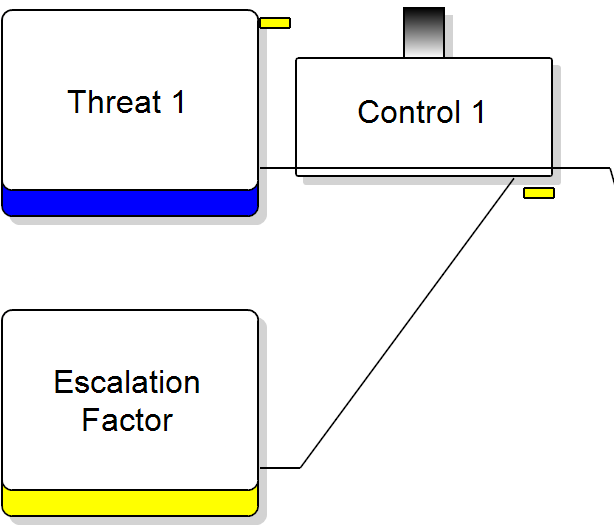
A Worked Example
Consider a simple safety measure and how it can be quietly undermined:
- The control: an automatic fire-suppression system is installed to contain a fire.
- The escalation factor: the system is poorly maintained, so its pressure gauges are never checked.
- The effect: the control still appears to be in place, but its real-world effectiveness has been eroded — and no one realises until it’s needed.
The control hasn’t been removed, and on the diagram it still looks like solid protection. That’s exactly why escalation factors matter: they capture the hidden weaknesses that a simple list of controls would miss.
Why They Matter
Mapping escalation factors turns a BowTie from a snapshot of controls into a realistic picture of how those controls behave over time. Done well, they help you to:
- Expose weak points in your safety systems – the barriers that look robust on paper but depend on conditions that aren’t always met.
- Identify the conditions that increase risk – the maintenance gaps, environmental factors, human factors, or dependencies that quietly degrade protection.
- Pinpoint where extra controls are needed – so you can reinforce the barriers that matter most, rather than spreading effort evenly across all of them.
Traps and tips
- Trap: vague statements such as “radio does not work.”
- Tip: describe clearly why or how the control is degraded.
- Trap: cluttering the diagram with every conceivable escalation factor.
- Tip: include only the credible, significant ones that genuinely threaten a control.
Escalation Factor Controls
Identifying a weakness is only half the job — the next step is to manage it. Escalation factor controls are additional measures introduced specifically to keep an escalation factor in check, so that the primary control it threatens stays effective.
In the fire-suppression example above, the escalation factor was poor maintenance. The matching escalation factor control might be a scheduled inspection-and-testing regime, backed by an action tracker that ensures each check is actually completed. The primary control (the suppression system) is protected by a second, targeted control (the maintenance regime) aimed squarely at its weak point.
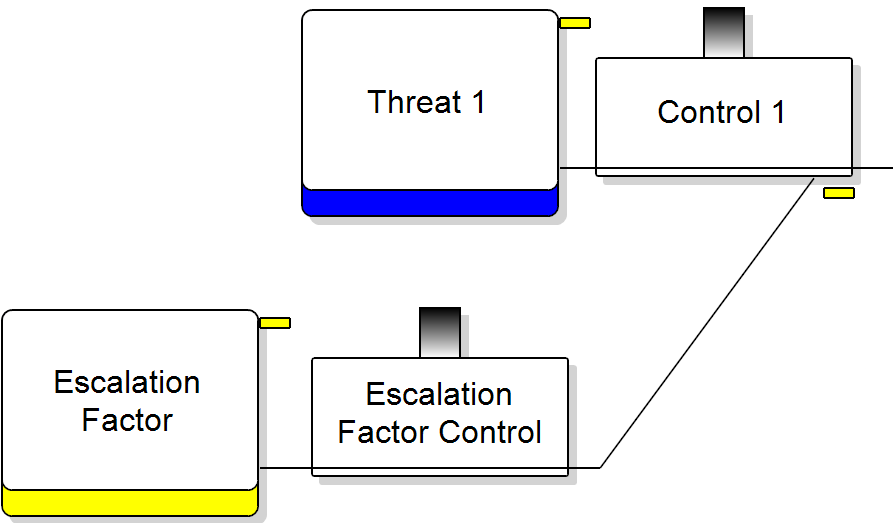
Managing Escalation Factors
To manage escalation factors:
1. Identify Potential Weaknesses
- Review controls linked to threats and consequences
- Identify conditions that may impact their effectiveness
2. Add Escalation Factors
- Define the condition affecting the control
- Provide a clear description
3. Apply Additional Controls (if required)
- Introduce measures to manage the escalation factor
- Ensure the primary control remains effective
4. Review and Update Regularly
- Monitor escalation factors over time
- Update them as conditions change
Escalation factors help ensure that controls remain reliable under real-world conditions. By identifying and managing these factors, you can strengthen your overall risk management strategy in BowTiePro.
Summary
Escalation factors are what keep a BowTie honest. By capturing the conditions that can quietly defeat a control — and by pairing each significant one with an escalation factor control to manage it — organisations move beyond simply listing their barriers to actively assuring them. The result is a set of controls you can trust to remain reliable and effective, not just on the day the diagram was drawn, but over the long life of the risk.