
In BowTie Pro LOPA assessments, controls are assigned PFD (Probability of Failure on Demand) values to calculate how effective a safeguard is at reducing risk.
PFD values represent the likelihood that a control may fail when required during a hazardous event.
Accurate PFD values are essential for:
- Reliable LOPA calculations
- Proper safeguard evaluation
- Risk reduction analysis
- SIL (Safety Integrity Level) assessment
- Operational safety planning
Opening the LOPA Diagram
To configure control PFD values:
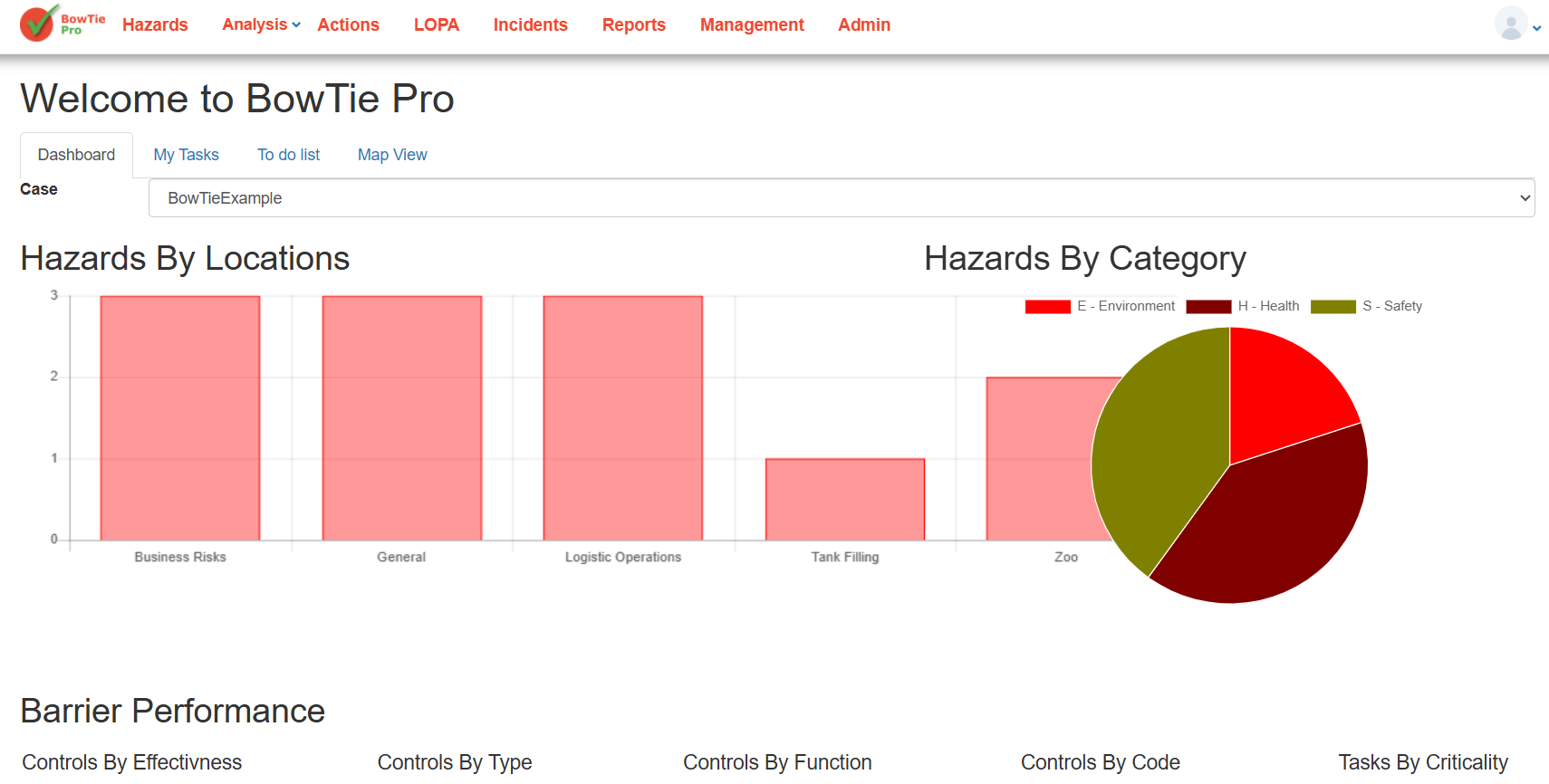
- Open the LOPA module from the top navigation menu.
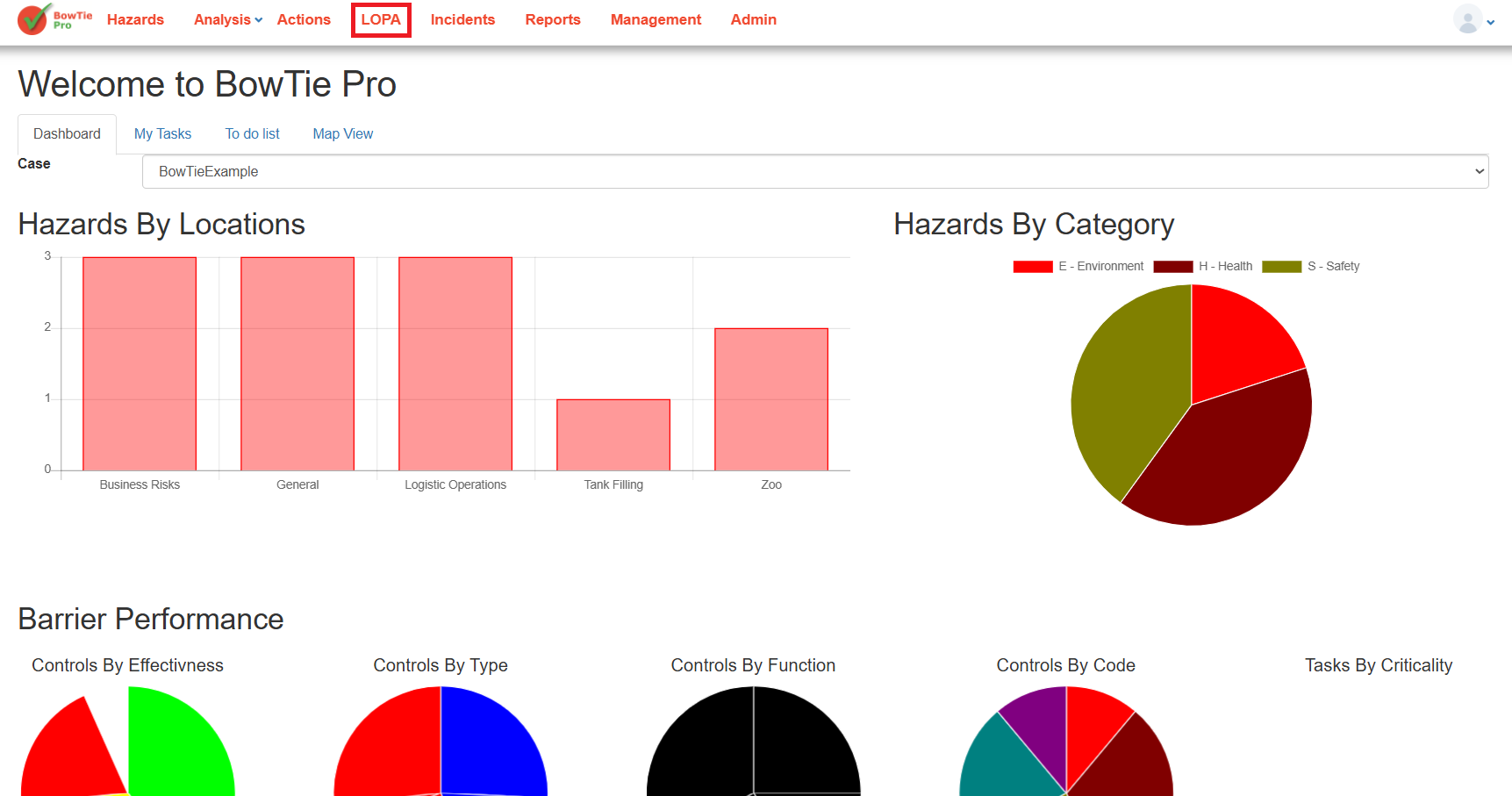
- Open an existing LOPA assessment.
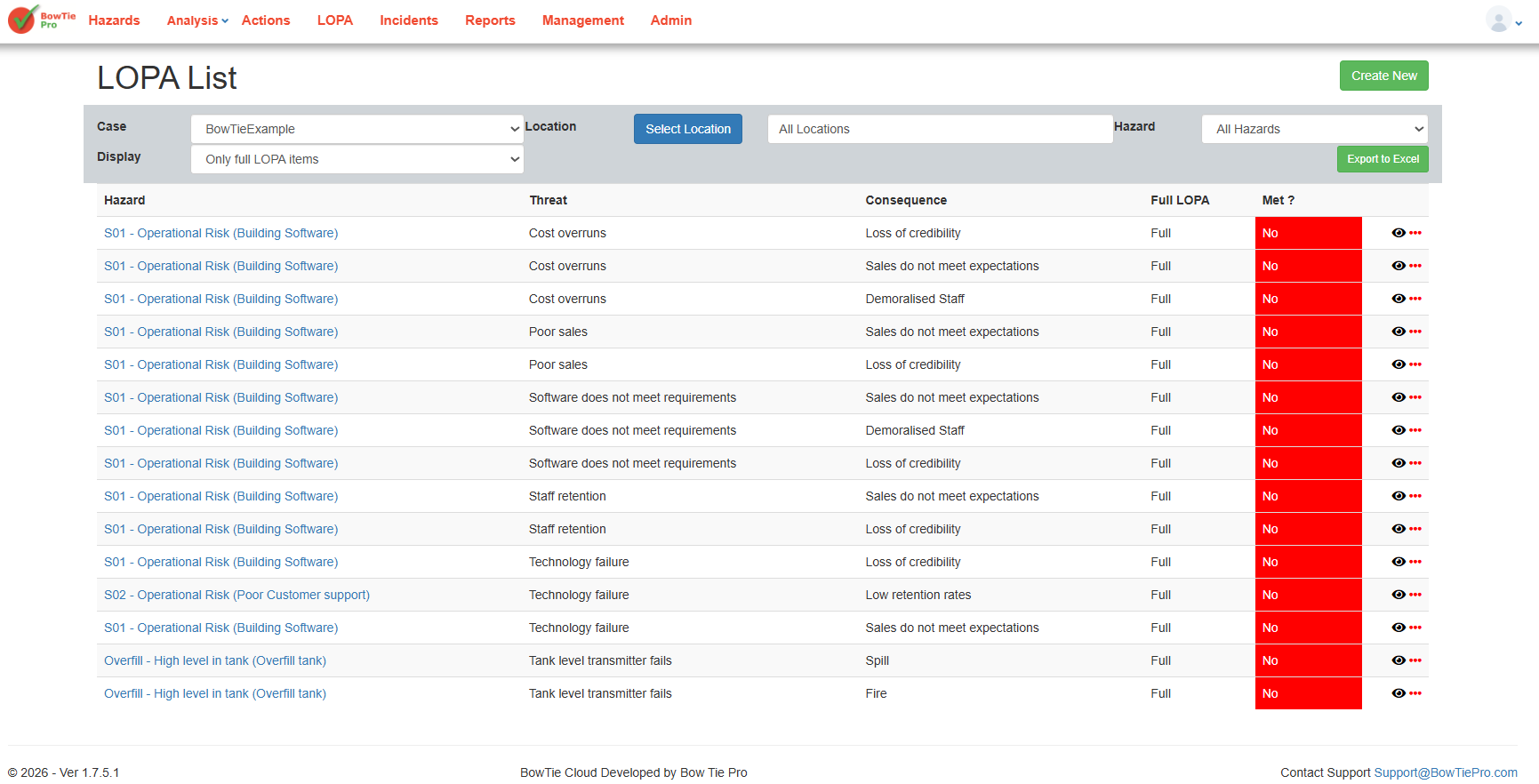
- The LOPA diagram will display:
- Threats
- Controls/barriers
- Hazard
- Consequences
Opening the LOPA Control Details Screen
PFD values are configured within the control settings.
To open the control details:
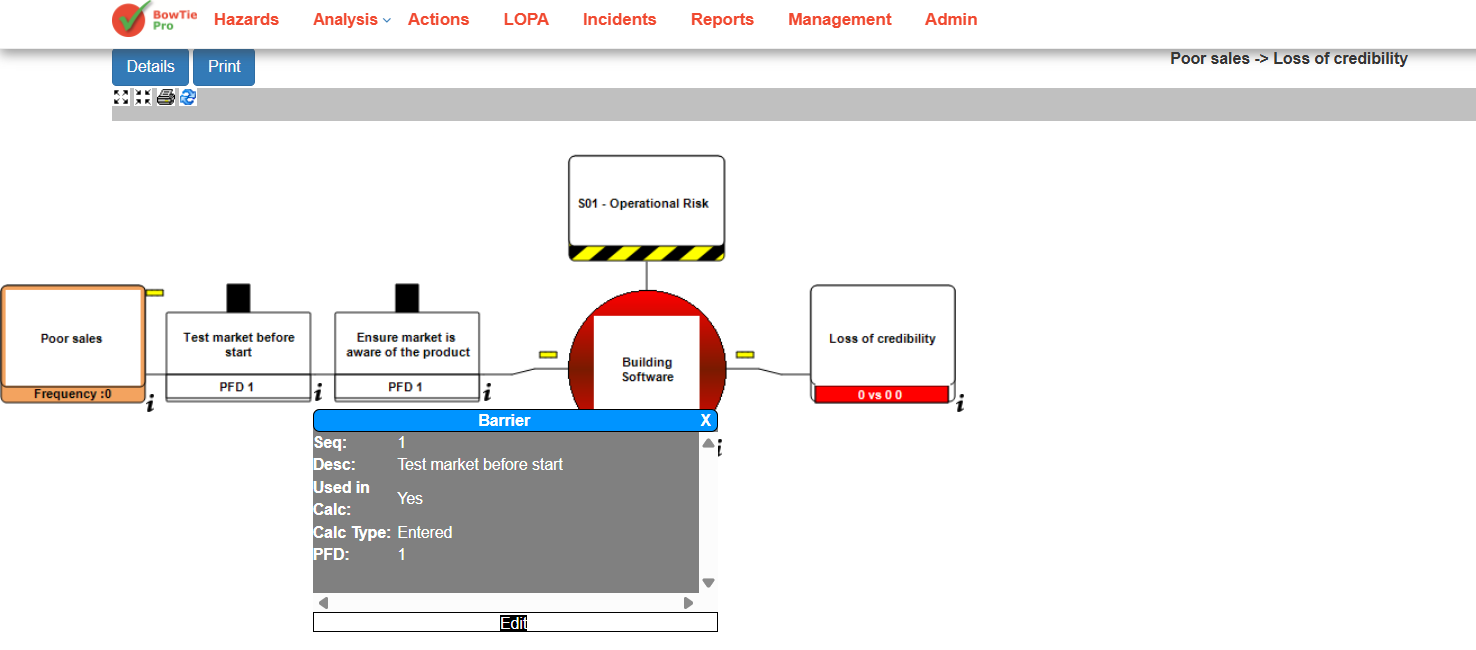
- Click the small information (i) icon below a control/barrier.
- A barrier information popup will appear.
- Click Edit.
You will be redirected to the LOPA Control Details screen.
Configuring the PFD Value
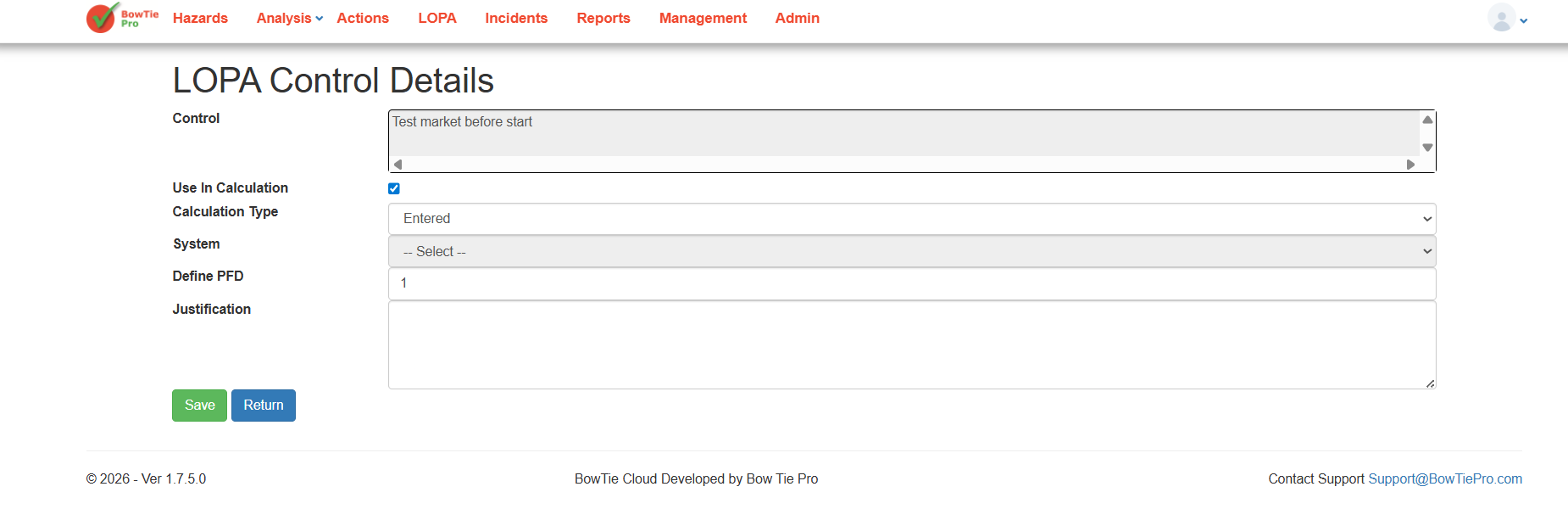
Inside the LOPA Control Details screen, locate the Define PFD field.
To configure the value:
- Ensure Use In Calculation is enabled.
- Select the required Calculation Type.
- Enter the desired PFD value in the Define PFD field.
- Add justification or supporting notes if required.
- Click Save.
The configured PFD value will now be used in the LOPA calculation process.
Understanding PFD Values
PFD values determine how reliable a control is during demand situations.
General interpretation:
- Lower PFD values = stronger and more reliable safeguards
- Higher PFD values = weaker safeguards with higher failure probability
For example:
- A PFD of 0.01 indicates a highly reliable safeguard
- A PFD of 1 indicates no effective protection
Organizations should use validated engineering or operational data when assigning PFD values.
Best Practices for Configuring PFD Values
When configuring PFD values:
- Use realistic operational data
- Avoid overly optimistic assumptions
- Review safeguard performance regularly
- Document justification clearly
- Align values with industry safety standards
- Validate values during audits and reviews
Why Accurate PFD Values Matter
Incorrect PFD values can lead to:
- Inaccurate risk calculations
- Misleading LOPA results
- Poor safeguard decisions
- Incorrect SIL determination
- Increased operational risk exposure
Properly maintained PFD values improve both safety and compliance.