
Acceptance criteria and Safety Integrity Levels (SIL) are important concepts within Layer of Protection Analysis (LOPA).
BowTiePro uses these concepts to help organizations determine whether existing safeguards reduce risk to acceptable levels.
What Are Acceptance Criteria?
Acceptance criteria define the maximum level of risk considered acceptable for a specific scenario.
Within a LOPA assessment, BowTiePro evaluates whether the calculated residual risk meets these predefined criteria.
If the calculated risk exceeds acceptable limits, additional safeguards or protection layers may be required.
Reviewing Acceptance Status
Users can review acceptance status directly from the LOPA assessment list.
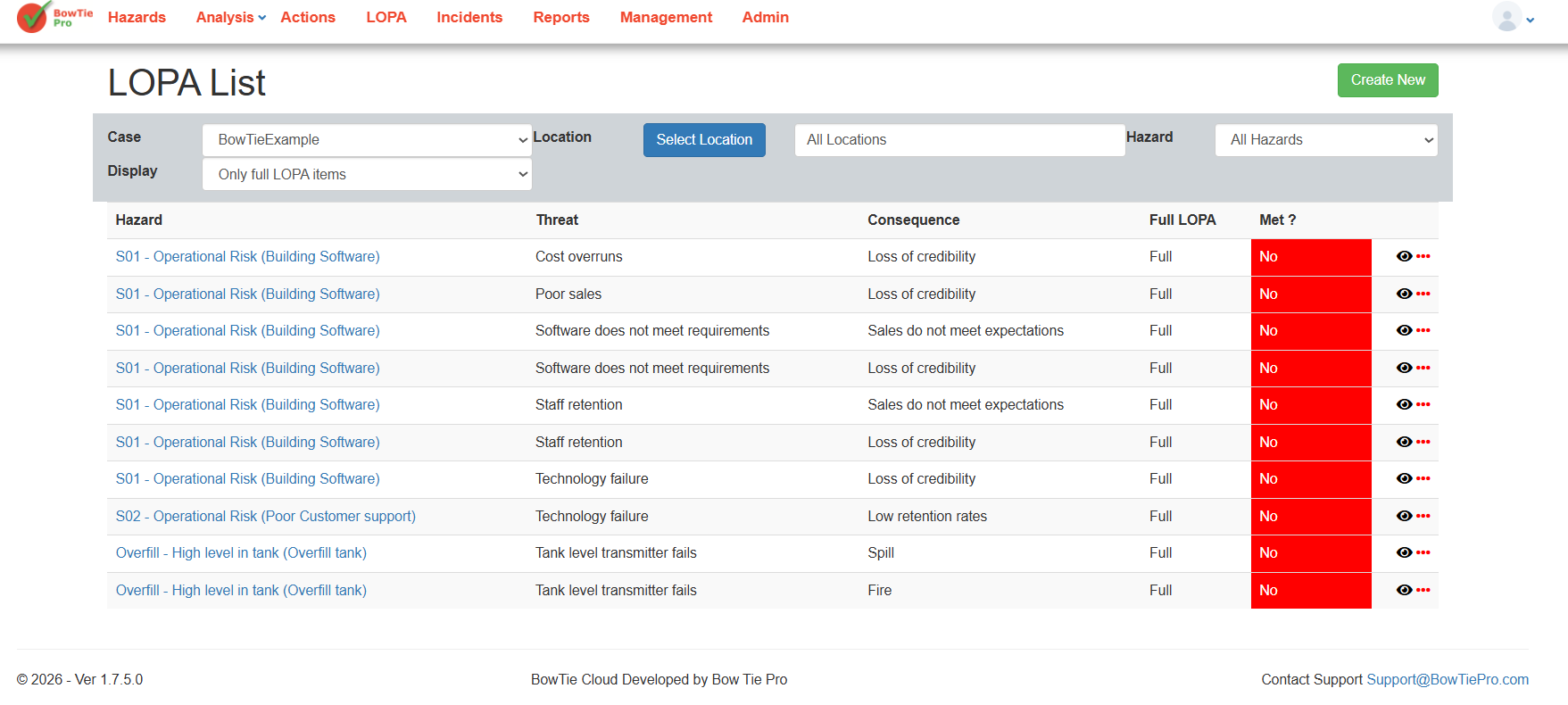
The Met? column indicates whether the scenario satisfies the configured risk acceptance requirements.
Possible results include:
- Yes — Risk is within acceptable limits
- No — Additional risk reduction measures may be needed
Understanding SIL Levels
SIL (Safety Integrity Level) is a measurement used to evaluate the effectiveness and reliability of safety functions and protection systems.
SIL assessments help determine how much risk reduction is required for hazardous scenarios.
Higher SIL requirements generally indicate that stronger or more reliable safeguards are needed.
How BowTiePro Supports SIL-Related Analysis
BowTiePro uses LOPA calculations to help users understand whether current safeguards provide sufficient protection.
The assessment considers:
- Threat frequencies
- Independent protection layers (IPLs)
- PFD values
- Enabling factors
- Condition modifiers
- Consequence controls
These elements collectively contribute to overall risk reduction.
Reviewing Risk Reduction in the LOPA Diagram
The LOPA diagram provides a visual representation of how controls reduce risk between threats and consequences.
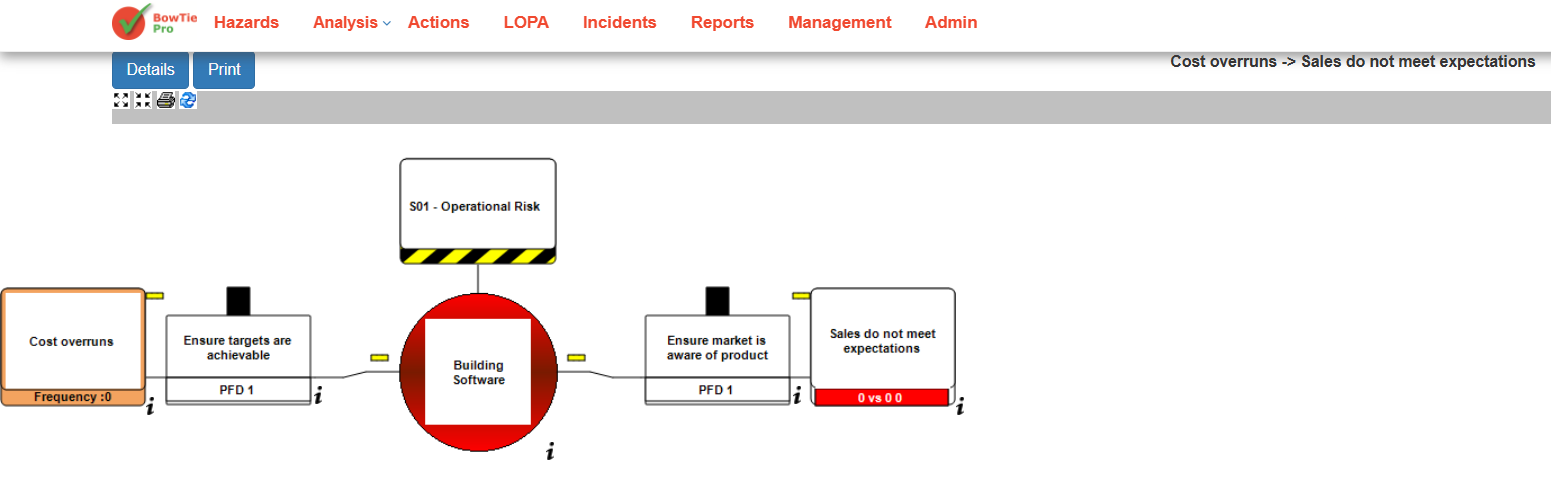
The diagram helps users identify:
- Existing protection layers
- Weak or missing safeguards
- Relationships between threats and consequences
- Areas requiring additional controls
Reviewing Detailed Assessment Information
Detailed LOPA calculation information is available within the LOPA Details page.
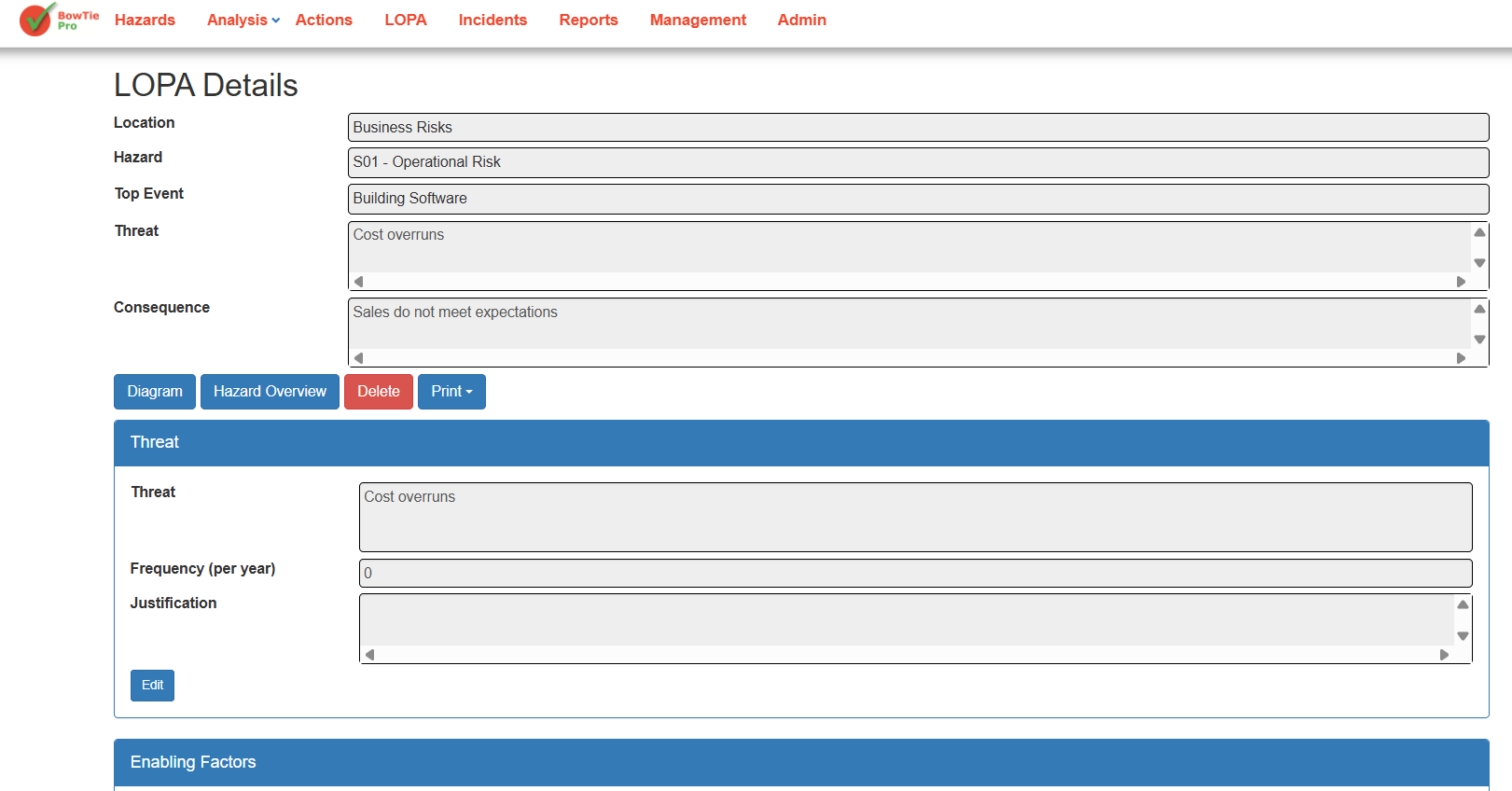
The details page includes:
- Threat frequency values
- Control PFD values
- Control justification
- Enabling factors
- Condition modifiers
- Consequence information
This information supports risk evaluation and SIL-related decision making.
Understanding “Met” and “Not Met”
A scenario marked as Met generally indicates that:
- Existing safeguards provide adequate risk reduction
- Residual risk is acceptable
- Current controls meet assessment expectations
A scenario marked as Not Met may indicate that:
- Additional IPLs are required
- Existing safeguards are insufficient
- Threat frequency is too high
- PFD values need improvement
Best Practices
When evaluating acceptance criteria and SIL-related assessments:
- Ensure frequencies are realistic and validated
- Use accurate PFD values
- Verify control independence
- Regularly review protection layers
- Document clear justifications
- Reassess after operational changes
Properly configured LOPA assessments help organizations improve safety, strengthen risk management, and support informed operational decisions.