
The Action Tracking module in BowTie Pro allows users to create, assign, and manage actions related to operational risks, deficiencies, audits, and assessments.
Actions help organisations ensure that identified issues are properly tracked and resolved through a structured workflow.
The Actions can be created from multiple locations such as incidents but are usually linked to Hazards and Controls.
Accessing the Action Tracking Module
To create a new action:
- Log in to BowTie Pro.
- Navigate to the appropriate Hazard by first clicking the Hazards button at the top and then selecting the 👁 (View) to open the overview screen.
- This will open the Hazard Overview screen.
- Now Select the “Action Tracking” tab to see if any Actions are created for the Hazard
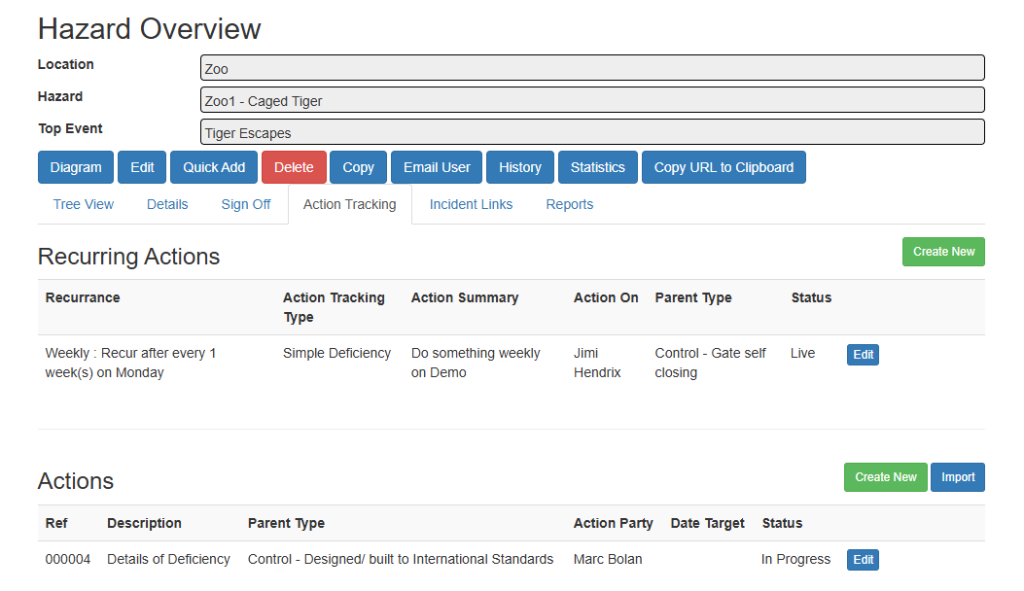
From this screen it is possible to
- View/ Edit and Create Recurring Actions including ones for the Controls under the hazard
- View/ Edit and Create Actions including ones for the Controls under the hazard
A similar view is available on the Controls Screen.
To create a new single Action click “Create New” to the right of the “Actions” title
Creating a New Action
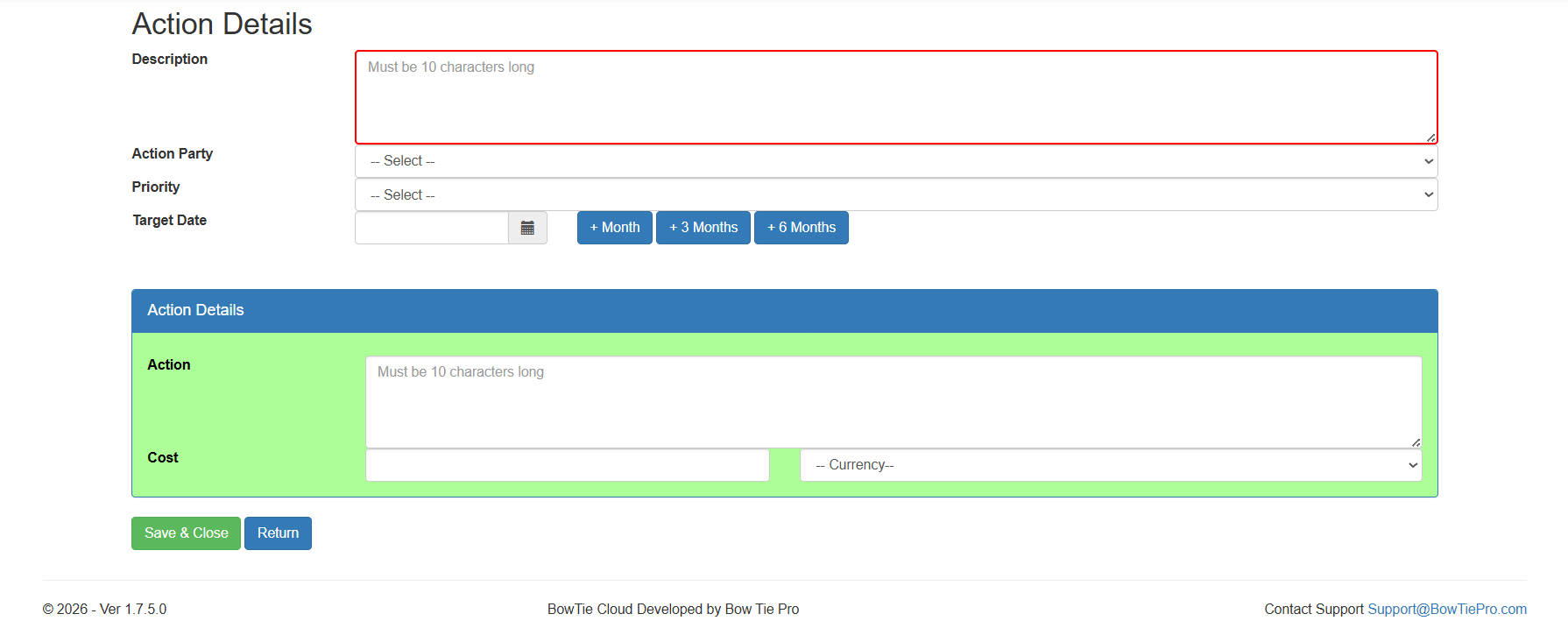
When creating a new action, users must provide the required action details.
The Action Details screen includes fields for:
- Description
- Assigned party
- Priority
- Target completion date
At a later date there is required before sign off
- Action details
Due to the configurable nature of the Action Tracking module there may also be other fields that may be either optional or required
These fields help organisations manage accountability and track corrective activities effectively.
Entering the Action Description
The The Description Description field is used to define the issue or task that needs to be addressed.
Action descriptions should:
- Clearly explain the required activity
- Be specific and actionable
- Include enough detail for the assigned party
Example: “Review and update operational maintenance procedures for critical equipment.”
Assigning the Responsible Party
The Action Party field allows users to assign responsibility for completing the action.
This helps:
- Establish accountability
- Improve follow-up tracking
- Clarify ownership of corrective activities
Users can select the responsible person or team from the available list. When the Action is saved an automatic email will be sent to the user letting them know that the action has been created an assigned to them.
Setting the Priority (optional)
The Priority field defines the urgency or importance of the action.
Prioritisation helps organisations:
- Focus on high-risk issues first
- Manage workloads effectively
- Improve operational response times
Priority levels may vary depending on system configuration.
Defining the Target Date
The Target Date field specifies when the action should be completed.
Users can:
- Select a custom target date
- Use quick date options such as:
- +1 Month
- +3 Months
- +6 Months
Setting realistic deadlines helps improve workflow management and action completion.
Adding Action Details
The Action Details section provides additional information related to the corrective or preventive activity.
This section may include:
- Detailed implementation steps
- Operational notes
- Resource requirements
- Additional instructions
Providing complete details improves clarity for the assigned party.
Saving the Action
After entering all required information:
- Review the action details.
- Click Save & Close.
- You will be returned to the screen you started from, which in this example is the Hazard screen.
The action will then appear within:
- The Action List view
- The Action Board view
- Workflow tracking screens
Managing Assigned Actions
Once created, assigned actions can be:
- Updated
- Reviewed
- Reassigned
- Tracked through workflow stages
- Closed after completion
This ensures all activities remain traceable throughout the action lifecycle.
Best Practices
When creating and assigning actions:
- Use clear and descriptive titles
- Assign actions to the correct responsible party
- Set realistic due dates
- Define appropriate priorities
- Include detailed implementation notes
- Regularly monitor action progress
Maintaining accurate action records helps improve accountability and operational risk management.